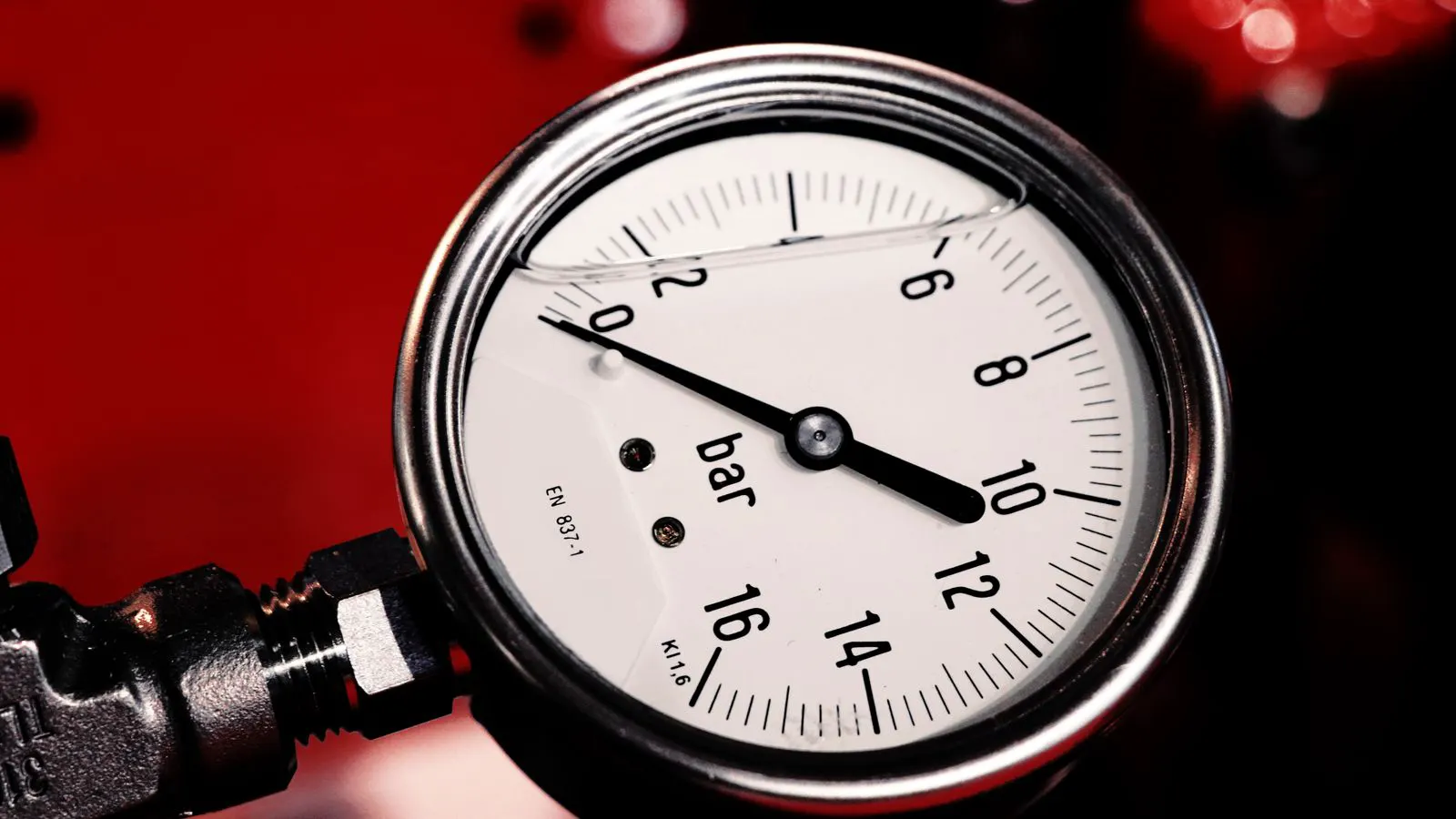
Outlook: Smart Sensors in Extrusion Quality Control

Smart sensors are moving extrusion quality control from periodic manual checks to continuous, data-driven monitoring. This shift improves defect detection, supports predictive maintenance, and enables tighter process control. Buyers should plan for better sensor integration, data management, and operator training.
- Continuous sensing replaces spot checks, catching defects earlier in the extrusion line
- Data from sensors supports predictive maintenance and tighter process windows
- Integration with existing SCADA and MES systems is a major preparation step
- Operator roles shift from manual inspection to data review and intervention
- Vendor selection should prioritize sensor reliability and ease of data access
Why extrusion quality control is changing
Traditional quality assurance in extrusion plants relied on periodic inspections, manual measurements, and end-of-line testing. A technician would pull a sample, measure thickness with a caliper, or inspect a sheet for surface defects. Problems often surfaced only after a batch had already produced a significant amount of scrap.
This model is giving way to continuous, sensor-based monitoring. Infrared thermography, near-infrared spectroscopy, and laser profilometry now sit closer to the melt and the die. They provide real-time feedback on temperature, material composition, and geometric dimensions. The result is a faster response to process drift and a clearer record of what happened during production.
The change is not just about adding instruments. It changes how the plant organizes quality responsibility, how data is stored, and how maintenance teams plan interventions.
What smart sensors actually measure in an extruder
The term smart sensor covers a broad set of devices. In extrusion, the most useful ones measure variables that directly affect product quality.
- Infrared pyrometers track barrel and die surface temperatures. They can detect hot spots or cooling failures before they appear as visible defects.
- Die pressure sensors provide a continuous signal of melt flow resistance. A steady rise often signals filter clogging or a change in material viscosity.
- Vibration sensors monitor drive motors, gearboxes, and screw assemblies. Patterns in vibration can indicate bearing wear or mechanical misalignment.
- Near-infrared sensors analyze material properties such as moisture content and molecular structure. They are useful for detecting off-spec raw material before it reaches the die.
- Laser line profilers map surface and cross-sectional geometry as the product exits the die. They can detect thickness variation, waviness, or surface roughness in real time.
Each sensor type has a specific role. A temperature reading alone does not explain a quality problem. The value comes from combining signals. A slight temperature rise combined with a pressure increase and a change in vibration pattern gives a more complete picture than any single reading.
| Sensor Type | Primary Measurement | Typical Quality Impact |
|---|---|---|
| Infrared Pyrometer | Surface and barrel temperature | Hot spots, cooling failures, thermal drift |
| Die Pressure Transducer | Melt flow resistance | Filter clogging, viscosity changes, blockage |
| Vibration Sensor | Mechanical oscillation | Bearing wear, gearbox faults, misalignment |
| Near-Infrared Spectroscopy | Material composition and moisture | Off-spec raw material, chemical changes |
| Laser Line Profiler | Surface and cross-section geometry | Thickness variation, waviness, surface defects |
The table above summarizes the main roles. In practice, a modern extrusion line may use several of these simultaneously. The challenge is not the sensors themselves, but making sense of the data they produce.
How continuous monitoring changes defect detection
Spot checks are useful, but they are slow. If a sensor is placed at the die exit, it can flag a thickness deviation within seconds. A manual inspection at the end of a 50-meter sheet might take minutes to find the same issue, and by then the entire length may be out of spec.
This shift has two practical effects. First, scrap reduction becomes a function of reaction time. The faster the operator or control system responds, the less material is wasted. Second, quality records become granular. Instead of a weekly summary, the plant has a timestamped log of every variation. This data is valuable for traceability, customer audits, and root-cause analysis.
There is a trade-off, though. More sensors mean more data. If the information is not organized, it becomes noise. Operators need clear dashboards that highlight only the deviations that matter. A wall of raw numbers does not help an operator make a decision. The system must translate sensor output into actionable alerts. For example, a die pressure sensor should alert when the reading exceeds a defined threshold, not just when it changes.
The role of plastics automation in data management
Smart sensors are only one part of the system. To use the data effectively, the plant needs a layer of plastics automation that connects the sensors to the control logic. This layer often includes SCADA systems, machine learning models, and middleware that translates sensor signals into setpoint changes.
In a basic setup, a temperature sensor sends a reading to a human operator. In a more advanced setup, the reading triggers a small adjustment to a barrel heater or cooling bar. This closed-loop control keeps the process within a tighter window without waiting for a human to intervene.
The depth of automation varies by plant. Some facilities use sensors for monitoring and alerting only. Others use them to automatically adjust process parameters. The choice depends on the material, the product specification, and the level of trust in the control logic. A simple thermoplastic film line may not need the same level of automation as a high-precision medical tubing line.
Buyers should ask vendors how their sensor packages integrate with existing control systems. Can the data be exported to a MES? Can the alerts be routed to a mobile device? Can the control logic be adjusted without a software rewrite? These questions determine whether the system is a standalone instrument or a part of the plant’s operational ecosystem.
What buyers should do to prepare
Preparing for smart sensor integration does not require replacing the entire extrusion line. It does require a structured approach.
- Audit the current quality process. Identify where defects are detected today and how long it takes to respond. This baseline is needed to measure improvement.
- Map critical quality parameters. Decide which variables affect the product most. For a sheet extruder, thickness and surface finish may be top priorities. For a pipe extruder, wall thickness and temperature uniformity may matter more.
- Check data infrastructure. Ensure the plant has the network capacity and storage to handle continuous sensor data. Cloud-based solutions are common, but local servers may be preferred for data security.
- Plan for operator training. Operators need to understand what the sensors measure, what the alerts mean, and when to intervene. Without training, the data is ignored or misinterpreted.
- Select vendors based on integration, not just hardware. The sensor itself is less important than how well it fits into the existing control logic and data systems. A cheap sensor that requires a custom interface is often more expensive than a premium sensor that plugs into an existing standard.
This preparation is not a one-time event. As sensors become more common, the focus shifts from installation to optimization. The first year may be about getting the system running. The second year is about tuning the alerts and control logic. The third year is about using the data to improve process windows and reduce variability.
How this outlook relates to other plant issues
The rise of smart sensors does not eliminate traditional maintenance and troubleshooting tasks. It changes how they are approached. For example, a clogged extruder filter is still a common problem. In the past, a technician might notice increased die pressure and shut the machine down to clean the filter. With a continuous pressure sensor, the system can alert the operator before the pressure reaches a critical level. The maintenance task remains the same, but the timing improves.
Similarly, surface roughness in extruded sheets is often linked to die temperature, melt flow, or raw material quality. A laser profilometer can detect surface defects early, and a temperature sensor can show if a barrel zone is running too hot. The combination of data helps isolate the cause. This is a practical benefit, but it does not replace the need for a well-maintained die or a properly cooled barrel. The sensors provide information, but the physical maintenance still has to happen.
Buyers should not expect smart sensors to fix a poorly maintained machine. They are an enhancement to a sound process, not a substitute for it.
What to look for in a sensor package
When evaluating sensor options, focus on reliability and data accessibility. A sensor that drifts out of calibration in a few months is not useful for quality control. Ask about calibration intervals and whether the vendor provides automatic drift correction.
Consider the environmental conditions in the plant. Extrusion lines operate in hot, humid, and sometimes dirty environments. Sensors need to be rated for these conditions. A sensor designed for a clean laboratory will not survive on a production floor.
Finally, look at the data format. Raw sensor data is useful, but structured data is easier to work with. If the sensor can output standard formats such as Modbus or OPC-UA, it will integrate more easily with existing systems. If the data is locked in a proprietary format, the long-term cost and complexity increase.
The goal is a system that provides clear, actionable information without adding unnecessary complexity. The best sensor package is the one that the plant team actually uses.
Final thoughts on the shift
The move toward smart sensors in extrusion quality control is gradual but consistent. It is not a single purchase, but a change in how the plant thinks about quality and maintenance. The immediate benefit is better defect detection and less scrap. The longer-term benefit is a deeper understanding of the process, which supports continuous improvement.
Buyers should not rush to install sensors just because they are available. Start with the most critical quality parameters. Integrate the data into existing systems. Train the team. Then expand. This approach reduces risk and builds confidence in the technology.
The plants that benefit most are those that treat sensors as part of the process, not as an add-on. The data is only as good as the decisions made with it. Smart sensors provide the information. The plant still has to act on it.
Frequently asked questions
Do smart sensors replace manual quality checks?
No. They complement manual checks by providing continuous data. Manual inspections are still needed for final verification and for checking issues that sensors cannot detect, such as some types of surface defects or material contamination.
How much does it cost to add sensors to an existing extruder?
Costs vary widely depending on the number of sensors, the type of integration, and the existing control system. A basic temperature and pressure package is less expensive than a full system including near-infrared spectroscopy and laser profiling.
Can smart sensors detect problems in the raw material?
Yes. Near-infrared sensors can analyze material properties such as moisture content and molecular structure. They can detect off-spec raw material before it enters the die.
Do I need a new extruder to use smart sensors?
No. Sensors can be added to existing extruders. The main requirement is access to the measurement points and an integration point for the data.
How long does it take to see results?
Immediate results are possible from better defect detection. Longer-term benefits, such as reduced scrap and improved process stability, build over time as the data is used to tune the process.