Blow Molder Buyers Guide: Motor and Servo Systems
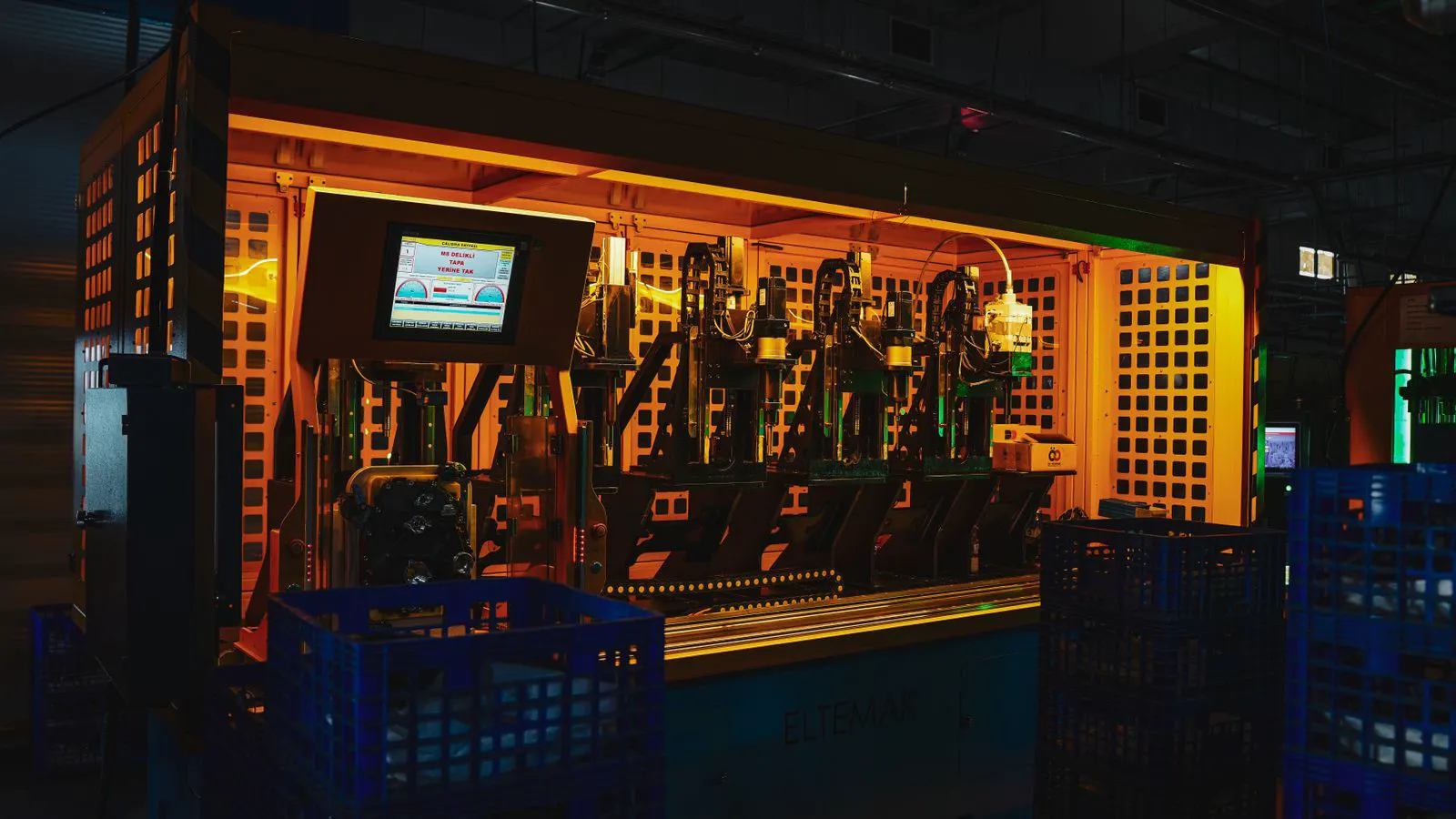
Choose between servo and motor systems based on cycle speed, energy needs, and part complexity. Servo drives offer precise control and lower energy use. Standard motors suit high-volume, simple parts. Evaluate both for your specific production needs.
- Match drive power and control precision to your part geometry and cycle speed requirements.
- Servo systems reduce energy consumption per cycle through variable speed control.
- Standard motors lower initial cost but can increase wear and energy use over time.
- Evaluate total cost of ownership, including maintenance, downtime, and part quality.
- Test candidate systems on your actual materials and tooling before final selection.
Match Drive Power to Part Geometry
Blow molder components must handle the mechanical load of the mold, the pressure of the air, and the speed of the cycle. The drive system determines how much force the machine can apply during inflation, cooling, and ejection. A drive rated too low will struggle with thick-walled containers or large diameter parts. It may stall, overheat, or fail to hold the mold closed against internal pressure.
A drive rated too high wastes energy and increases capital cost. It may also introduce vibration or noise that affects part quality. Start with the mold mass, the maximum internal air pressure, and the target cycle time. These three factors define the torque and speed requirements.
The mold mass sets the baseline for inertial load. A large steel mold with heavy tooling requires higher initial torque to move at the desired speed. The maximum internal air pressure determines the clamping force needed to keep the mold halves closed. If the internal pressure spikes due to a sensor error or a burst in the air line, the drive must hold firm without moving the mold open. This prevents leaks and protects the part surface from distortion.
The target cycle time sets the speed profile. A machine running a 12 second cycle has different requirements than one running a 6 second cycle. The difference is not just speed. It is the acceleration and deceleration rate. Moving a heavy mold from a stop to full speed in one second requires significantly more power than moving it over two seconds. The drive must handle these transient loads. If the motor is underpowered, the cycle time will creep up. The operator will see longer cycles and lower throughput. The drive may also overheat during these frequent high-torque events, triggering thermal protection that stops production.
Consider the part geometry as well. A small cup with thin walls requires less inflation force than a large jug with thick, reinforced walls. The jug requires higher pressure to expand the parietal wall without thinning it too much. The drive must provide enough torque to maintain that pressure against the resistance of the parietal material. If the torque drops, the part may not inflate fully. The result is a short, undersized container that fails quality checks.
Compare Servo vs Motor Performance
Servo drives use variable frequency drives and closed-loop feedback to control speed and torque precisely. They can ramp up and down quickly, which shortens cycle times for multi-step operations. Servo systems also allow soft starts and stops, reducing stress on the mold and the machine frame.
Standard AC motors run at fixed speeds controlled by mechanical or electronic speed reducers. They are simpler and cheaper to install. However, they consume energy at full speed even when the machine is idle or waiting for a specific step. Speed changes require mechanical adjustments that increase wear on gears and belts.
Servo systems use encoders to monitor the actual position and speed of the motor. The drive controller compares this data with the commanded value and adjusts the output voltage and frequency in real time. This closed loop control allows the machine to stop instantly when the mold reaches the clamping position. It also allows the drive to provide high torque at low speed during the initial inflation stage and reduce torque during the cooling phase. This precision is critical for parts with complex geometries.
Standard AC motors rely on fixed gear ratios to achieve the required speed. Changing the speed requires changing the gears or adjusting the electronic variable frequency drive without closed loop feedback. This is less precise. The motor runs at a constant speed even when the machine is waiting for the mold to open or the part to cool. This idle energy consumption adds up over time. The mechanical components, such as belts and pulleys, also experience wear because they are always turning at speed.
For high-volume production of simple bottles or cups, a standard motor may offer acceptable ROI. For complex parts, multi-stage inflation, or frequent changeovers, a servo system delivers better precision and lower operating cost per unit. The key difference is control. Servo systems allow the operator to program different speed and torque profiles for each stage of the cycle. A standard motor requires manual adjustment of the mechanical components to change the speed profile.
Evaluate Energy Consumption and Operating Cost
Energy use is a major operating expense in blow molding. A standard motor draws peak current during startup and runs at a constant speed throughout the cycle. A servo drive modulates speed to match each step of the cycle. It draws less power during low-load phases and can recover energy during deceleration in some systems.
The savings depend on cycle time and duty cycle. If your machine runs continuously, the energy difference compounds quickly. If your machine operates in short batches or has long idle periods, the savings are smaller. Calculate the cost per cycle under both scenarios. Include the price of electricity in your local area and the expected annual production volume.
A standard motor consumes power based on its rated horsepower and the load on the motor. During startup, the current draw can be several times the rated value. This peak current causes voltage drops in the electrical supply, which can affect other equipment on the same circuit. Once the motor reaches speed, the current drops to a steady value. The motor continues to draw this steady current even when the machine is not moving the mold. This is because the motor is still turning the gears and belts at speed.
A servo drive adjusts the voltage and frequency to match the load. During the high torque phase of inflation, the drive supplies high power. During the low torque phase of cooling, the drive reduces power significantly. Some modern servo systems include energy recovery drives that capture the kinetic energy during deceleration and feed it back into the electrical supply. This can reduce the net energy consumption per cycle.
The total cost of ownership includes more than electricity. It includes the cost of the drive system itself, the cost of installation, and the cost of maintenance. A servo system typically has a higher initial cost than a standard motor. However, the operating cost per unit is lower. The energy savings, reduced maintenance, and shorter cycle times can offset the higher initial cost over time. The break-even point depends on the production volume and the specific application.
Assess Maintenance and Long-Term Reliability
Servo systems have more electronic components. They require periodic checks of encoders, feedback loops, and drive parameters. However, they reduce mechanical wear because they eliminate high-speed gear ratios and belts. The drive controls torque directly, so the machine does not exceed design limits during inflation or ejection.
Standard motors rely on mechanical speed control. Gears, belts, and clutches experience repeated stress. They wear over time and require replacement. The initial purchase price is lower, but the maintenance schedule is more frequent. Factor in spare parts, labor, and downtime. A downtime event of even a few hours can erase the initial savings of a cheaper motor.
Servo drives require electronic maintenance. The encoders, which are small sensors that measure the motor position, can fail if they get dirty or damaged. The drive controller requires periodic software updates and parameter checks. The wiring between the drive and the motor must be inspected for wear and damage. However, the mechanical components of the machine are less stressed. The drive controls the torque directly, so the motor does not have to work against high friction or high load. This reduces the wear on the gears, belts, and clutches.
Standard motors require mechanical maintenance. The gears, belts, and clutches wear down over time. The belts stretch and lose tension. The gears wear down and become noisy. The clutches may slip under load. These components require regular inspection and replacement. The initial purchase price of a standard motor is lower, but the maintenance costs are higher. The downtime required for maintenance can be significant. A broken belt or a worn gear can stop production for hours. The cost of this downtime can be higher than the cost of the energy savings from a servo system.
Choose Based on Production Volume and Part Mix
High production volume favors the lower operating cost of servo systems. The initial premium is recovered over time through energy savings and reduced maintenance. Low production volume or a stable mix of simple parts favors the lower initial cost of standard motors. The ROI period is longer, but the total cost may be lower for smaller operations.
Frequent changeovers favor servo systems. They can be reprogrammed quickly for different part geometries and cycle times. Changing the speed or torque profile for a new part does not require mechanical adjustments. This reduces changeover time and the risk of errors.
The production volume determines the payback period for the higher initial cost of a servo system. A machine running 24 hours a day, 7 days a week will see the energy savings accumulate quickly. A machine running 8 hours a day, 5 days a week will see the savings accumulate more slowly. The part mix is also important. A stable mix of simple parts, such as cups and small bottles, may not require the precision of a servo system. A changing mix of complex parts, such as containers with multiple gates and thin walls, requires the precision of a servo system.
Changeover frequency is a key factor. A machine that produces one type of part for weeks at a time benefits less from the quick reprogramming of a servo system. A machine that changes parts every few hours benefits significantly from the ability to load a new program quickly. The risk of errors during changeover is also lower with a servo system. The operator does not have to adjust mechanical components, which reduces the chance of misadjustment.
Criteria for Selecting the Right Drive System
Use the table below to compare options for your specific application.
| Criterion | What to look for | Why it matters |
|---|---|---|
| Cycle Time | Target seconds per cycle and step duration | Determines required torque and speed capability |
| Part Complexity | Number of inflation stages and wall thickness variations | Affects precision requirements and energy use |
| Production Volume | Annual units and machine running hours | Drives ROI calculation for energy and maintenance |
| Changeover Frequency | Number of part changes per shift | Servo systems reduce changeover time and setup effort |
| Initial Budget | Available capital for machine purchase | Standard motors lower upfront cost for limited budgets |
| Maintenance Resources | In-house technical skills and spare parts inventory | Servo systems require electronic expertise for troubleshooting |
Decision Checklist
- Confirm the target cycle time and the number of inflation stages.
- Measure the mold mass and the maximum internal air pressure.
- Calculate the estimated energy cost per cycle for both drive types.
- Estimate the annual maintenance cost for each system.
- Determine the changeover frequency and the number of different part types.
- Review the available technical skills for maintenance and troubleshooting.
- Request test runs on your actual materials and tooling.
- Verify the warranty terms and the supplier’s support response time.
Test Before You Buy
Do not rely on specifications alone. Run the candidate machine with your actual resin, mold, and target cycle time. Check the part weight, surface finish, and dimensional stability. Measure the energy use during a full shift. Track any alarms, errors, or manual interventions. These real-world tests reveal issues that are not visible in the sales data.
A drive system that works well on a simple cup may fail on a complex container. The precision required for thin walls, multiple gates, or complex shapes changes the requirements. Test the limits. Run the machine at the top of the speed range for an extended period. Check for temperature rise in the drive and the motor.
The test should include the worst case conditions. Run the machine with the heaviest mold and the highest internal air pressure. Run the machine with the fastest cycle time. Run the machine with the most complex part geometry. Observe how the drive handles these conditions. Does the motor overheat? Does the cycle time drift? Does the part quality degrade?
Also test the changeover process. Load a program for a different part and see how quickly the machine can switch to it. Observe the time it takes to load the program and the time it takes to stabilize the cycle. A servo system should handle this quickly and accurately. A standard motor may require manual adjustments, which takes more time and increases the risk of errors.
Measure the energy use during the test. Use a power meter to measure the power consumption of the machine during a full shift. Compare the measured energy use with the estimated energy use. If the measured energy use is higher than expected, investigate the cause. It could be a problem with the drive, the motor, or the electrical supply.
Final Considerations
The best drive system matches your production profile. There is no single winner. A standard motor can be the right choice for a stable, high-volume, simple part operation. A servo system is the right choice for complex parts, frequent changeovers, or tight energy targets.
Review the total cost of ownership over five years. Include energy, maintenance, downtime, and the cost of poor part quality. A lower purchase price does not always mean a lower total cost. The drive system is a long-term investment. Choose it based on how it performs under your actual conditions, not just on the sticker price.
The total cost of ownership includes more than the purchase price and the energy cost. It includes the cost of maintenance, the cost of downtime, and the cost of poor part quality. Poor part quality can lead to waste, rework, and customer complaints. A drive system that produces parts with consistent quality can reduce these costs. A drive system that produces parts with inconsistent quality can increase these costs significantly.
Consider the impact of the drive system on the machine’s lifespan. A drive system that reduces mechanical wear can extend the lifespan of the machine. A drive system that causes high stress on the mechanical components can shorten the lifespan of the machine. The lifespan of the machine affects the total cost of ownership. A machine that lasts longer has a lower cost per unit over its lifetime.
Also consider the impact of the drive system on the operator. A drive system that is easy to operate and maintain can reduce the operator’s workload. A drive system that is difficult to operate and maintain can increase the operator’s workload. The operator’s workload affects the machine’s productivity. A tired or frustrated operator is more likely to make mistakes.
The final decision should be based on a careful analysis of the production profile, the part mix, the production volume, and the maintenance resources. The goal is to find the drive system that provides the best balance of performance, reliability, and cost.
Frequently asked questions
What is the main difference between a servo drive and a standard motor in a blow molder?
A servo drive controls speed and torque precisely with electronic feedback. A standard motor runs at a fixed speed and uses mechanical components to change speed.
Which drive system uses less energy?
Servo drives generally use less energy because they modulate speed to match each step of the cycle. Standard motors draw full power throughout the cycle.
When is a standard motor the better choice?
A standard motor is often better for high-volume production of simple parts with a stable mix. It has a lower initial cost and is simpler to maintain.
How do I calculate the ROI for a servo system?
Estimate the annual energy savings and maintenance cost savings. Divide the cost difference between the servo system and the standard motor by the annual savings. This gives the payback period in years.
Do I need a technician to maintain a servo drive?
Basic maintenance can be done by trained operators, but troubleshooting often requires a technician with electronic experience. Check the supplier's support terms before buying.