Comparison: Air vs Water Cooling for Extrusion Dies
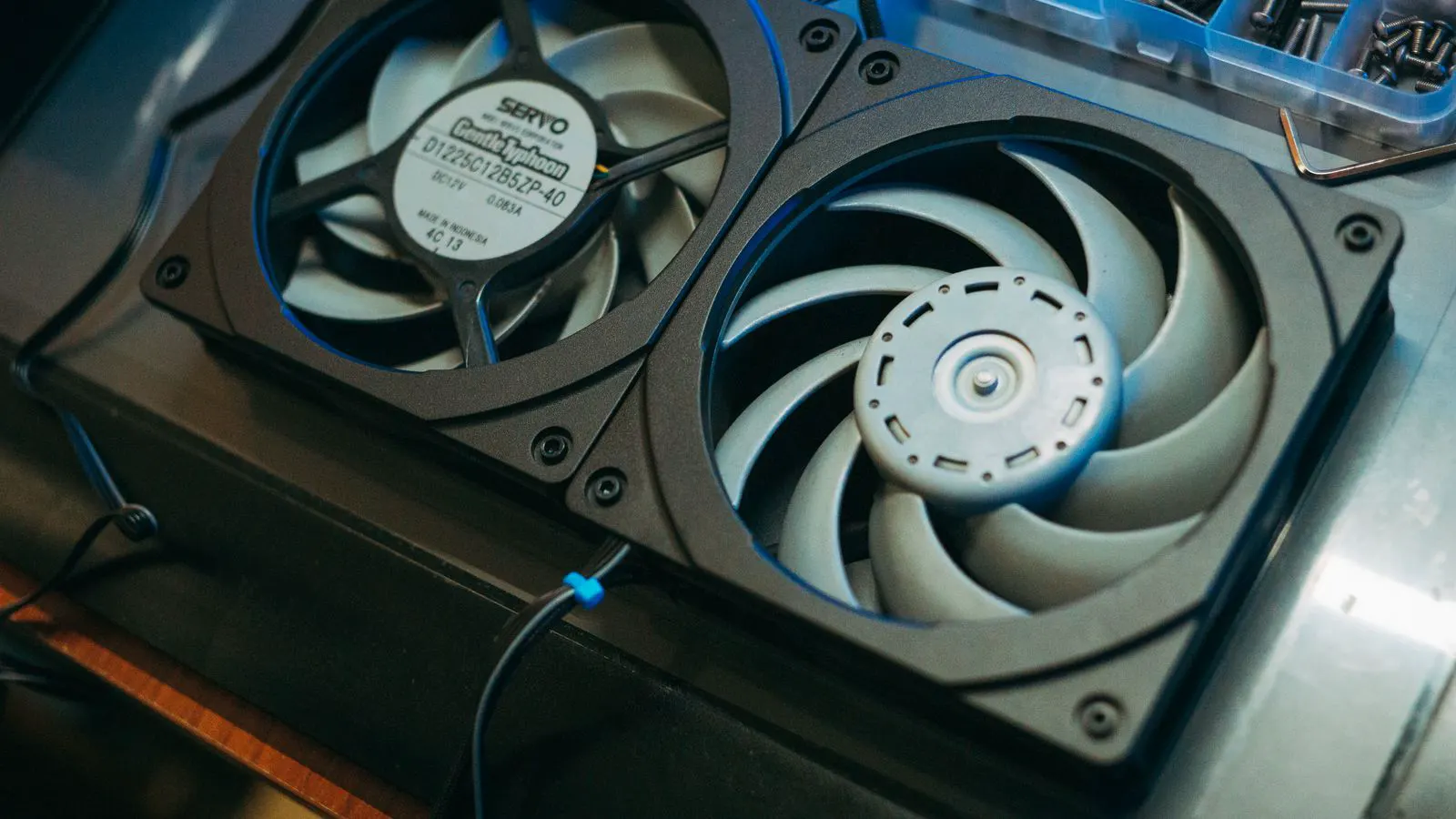
Air cooling is simpler and cheaper for low heat loads. Water cooling offers better temperature stability and higher capacity. Engineers should match the medium to die geometry, output volume, and plant infrastructure to avoid overheating or uneven cycles.
- Water cooling delivers more consistent die temperatures but requires a closed-loop system and regular maintenance.
- Air cooling is suitable for smaller dies or lower output lines where temperature variation is acceptable.
- Die geometry and thermal mass dictate which medium can handle the heat load.
- Plant infrastructure, such as existing chiller capacity or compressor availability, influences selection.
- Monitoring die surface temperature is required for either method to detect fouling or flow issues.
Heat Load and Thermal Mass
The first decision is matching the cooling medium to the heat generated by the extrusion process. Melt temperature, die material, and production speed all create a thermal load. A standard HDPE die running at high speeds produces significantly more heat than a small profile die at low output. The die body, usually steel or brass, acts as a heat sink. If the cooling medium cannot remove heat faster than the melt deposits it, the die temperature rises. This increases cycle time, causes surface defects, and can degrade the polymer.
Air cooling uses a fan to blow air across a finned heat exchanger attached to the die. Water cooling circulates chilled water through channels machined into the die itself. The difference in heat transfer coefficient between air and water is large. Water carries away more energy per unit volume. This makes water the default choice for high-speed or high-temperature extrusion. Air is the practical choice when the heat load is low or when plumbing a water circuit is impractical.
Performance Differences
The primary performance metric is temperature stability. Water cooling maintains a tighter temperature band. The high specific heat capacity of water absorbs the thermal energy without a large temperature rise. Air has a low specific heat capacity. It heats up quickly as it passes over the finned heat exchanger. This leads to greater temperature swings. The surface of the die may be cooler at the inlet but warmer at the outlet.
For films and sheets, temperature uniformity is critical. A hot spot on one side of the die creates a thickness variation. The material on the hot side flows faster and cools differently. This results in a lamination or thickness issue. Water cooling minimizes this risk. For rigid profiles or low-temperature polymers, the variation caused by air cooling is often within spec. The material does not flow as freely, so the thermal gradient has less effect on the final geometry.
Maintenance requirements also differ. Water cooling systems require monitoring of flow rate, pressure, and water chemistry. Scale buildup inside the channels reduces flow. This is a common failure mode. The channels are small. A small deposit can cause a local hot spot. The maintenance involves periodic chemical cleaning and water treatment. Air cooling has no internal channels. The heat exchanger is external. The main maintenance task is cleaning the fins. Dust and polymer dust accumulate on the fins. This reduces airflow and efficiency. A compressed air blast or a brush can restore performance.
Comparison of Cooling Methods
The table below summarizes the key differences.
| Option | Best for | Limitations |
|---|---|---|
| Water Cooling | High-speed lines, films, thick sections, tight temperature specs | Requires chiller, plumbing, maintenance, and water treatment |
| Air Cooling | Low heat loads, small profiles, simple machines, limited space | Poor temperature stability, dust accumulation, limited heat capacity |
| Hybrid Systems | Large dies where water handles the bulk and air assists | Complex controls, higher upfront cost, maintenance of two systems |
| Melt Cooler Integration | Lines where die cooling is secondary to post-melt cooling | Does not replace die cooling, adds cost and footprint |
Water cooling is the standard for high-volume production. The initial cost of the chiller and piping is higher. But the operational stability justifies it for most industrial lines. Air cooling is often found on smaller benchtop machines or for trial runs. The die is smaller, so the total heat is manageable. The fan is cheap. The setup is quick. If the line is running at half capacity, air cooling might suffice. If the line scales up, the die temperature will climb. The operator may notice longer cycle times or surface defects. This is the point where a cooling upgrade becomes necessary.
When to Choose Air Cooling
Air cooling is a valid choice in specific scenarios. The first is low-temperature processing. If the polymer processes at low temperatures, the heat generated is low. The die does not need aggressive cooling. A fan blowing over a finned block can maintain the temperature. The second scenario is space constraint. Adding a water circuit requires plumbing, a pump, and a chiller. In a compact machine footprint, this may not fit. Air cooling uses only a fan and a heat exchanger. The third scenario is a temporary or pilot line. If the machine is used for short runs or testing, the cost of a water system may not be justified.
However, air cooling has a ceiling. As the die size increases, the heat load rises. The finned heat exchanger has a limited surface area. Air cannot transfer heat as fast as water. If the die temperature exceeds the desired range, the operator cannot compensate by increasing fan speed alone. The material will degrade, or the cycle time will increase. The decision to use air cooling should be based on a calculation of the maximum heat load. If the estimated heat exceeds the capacity of a standard air cooler, water is required.
When to Choose Water Cooling
Water cooling is the default for serious production lines. The ability to maintain a constant temperature is a major advantage. The die surface stays at a set point. This ensures consistent melt flow. The cooling channels can be designed to target specific areas of the die. For example, the die lip can be cooled more aggressively than the barrel section. This allows for precise control of the final product dimensions.
The infrastructure requirement is the main barrier. The plant must have a water source or a closed-loop system. If the plant does not have a central cooling system, installing one is a capital project. The cost includes the chiller, pumps, piping, and controls. The maintenance burden is higher. Water chemistry must be managed. Hard water causes scale. Soft water can cause corrosion. The system requires regular testing and treatment. The cost of maintenance is ongoing. For a high-value product, the cost of a defective part due to die overheating may exceed the cost of the cooling system.
Hybrid systems are an emerging option. Some large dies use water for the main heat sink and air for auxiliary cooling. The water handles the bulk of the heat. The air assists in removing residual heat or maintaining temperature in areas where water flow is slow. This approach offers the stability of water with the simplicity of air. However, the control system must manage both mediums. The complexity increases. The maintenance team must be trained on both systems.
Selection Criteria for Engineers
Engineers should evaluate the die design first. The channel geometry determines the heat transfer efficiency. Narrow channels have a higher surface area to volume ratio. They transfer heat faster but are more prone to clogging. Wide channels are easier to clean but transfer heat slower. If the die is designed for water cooling, it will have machined channels. If it is designed for air cooling, it will have external fins. Mixing the mediums is not standard. A die designed for water cooling does not work well with air cooling. The heat transfer path is different.
The second criterion is the plant infrastructure. Does the plant have a central cooling plant? If yes, water cooling is easy to integrate. The cost is just the piping and the control loop. If no, the cost of a standalone chiller must be considered. The third criterion is the product spec. If the product requires tight dimensional tolerance, water cooling is preferred. If the product is a simple profile with loose tolerance, air cooling may be acceptable. The fourth criterion is the maintenance team. Water cooling requires a higher skill level for troubleshooting. Air cooling is simpler but less effective.
The final decision is a balance of cost, performance, and risk. A water cooling system costs more upfront but offers higher reliability and lower risk of defects. An air cooling system is cheaper and simpler but has a lower performance ceiling. The engineer must define the operating window. If the die temperature must be within a narrow band, water is the only option. If the band is wide, air is viable.
Maintenance and Monitoring
Both systems require monitoring. For water cooling, the operator must check the flow rate and the temperature difference between inlet and outlet. A drop in flow rate indicates a clog. A large temperature difference indicates poor heat transfer or a flow issue. The water temperature should be stable. Fluctuations can cause die temperature swings. The maintenance schedule includes checking for leaks, testing water quality, and cleaning channels. The channels can be flushed with a chemical solution during shutdowns.
For air cooling, the operator checks the fan speed and the heat exchanger cleanliness. The fins should be free of dust. The fan should run smoothly. A noisy fan indicates a bearing issue. The heat exchanger efficiency can be checked by measuring the air temperature rise across the fins. A high temperature rise indicates dirty fins or reduced airflow. The maintenance is simple. A compressed air blast or a brush can clean the fins. The fan motor should be lubricated if required.
The monitoring strategy is key. Install a thermocouple on the die surface. Log the temperature over time. Compare the data to the set point. If the temperature drifts, investigate the cooling system. For water, check the flow. For air, check the fins. This data helps in preventing failures. A slow temperature rise is an early warning. It is better to fix the cooling system during a planned stop than to react to a production defect.
Common Mistakes
One common mistake is underestimating the heat load. Engineers often design for a nominal speed but ignore the maximum speed. If the line runs faster than designed, the die overheats. The cooling system must be sized for the maximum expected output. Another mistake is ignoring the die material. Brass dies have lower thermal conductivity than steel. They heat up faster and cool down slower. The cooling medium must be matched to the die material. A water-cooled brass die requires a different design than a water-cooled steel die.
The third mistake is poor water treatment. Hard water causes scale. Scale reduces flow and creates hot spots. The water must be treated to prevent scaling and corrosion. The fourth mistake is not monitoring the system. Many plants install the cooling system and ignore it until a problem occurs. Regular monitoring prevents failures. The fifth mistake is using air cooling for a high-heat load. The operator may not notice the temperature rise until the product is defective. The cooling capacity must be sufficient from the start.
Conclusion
The choice between air and water cooling depends on the heat load, the product spec, and the plant infrastructure. Water cooling is the standard for high-performance extrusion. It provides stability and control. Air cooling is a simple and cheap option for low-heat applications. It is not suitable for high-speed or tight-tolerance lines. Engineers must calculate the thermal load and select the medium accordingly. The decision is not just about cost. It is about risk and reliability. The right cooling medium ensures the die operates within the desired temperature range. This leads to consistent product quality and lower maintenance costs.
Frequently asked questions
Can I switch from air cooling to water cooling on the same die?
Generally, no. The die design is specific to the medium. Water-cooled dies have internal channels, while air-cooled dies have external fins. Switching requires a new die or a retrofit that is rarely cost-effective.
How much does water cooling reduce die temperature compared to air?
The reduction depends on the heat load and the system design. Water typically maintains a much tighter temperature band, often within a few degrees of the set point, whereas air can cause larger fluctuations.
What is the main failure mode for water-cooled dies?
Scale buildup in the cooling channels is the most common issue. It reduces flow and creates local hot spots. Regular water treatment and chemical cleaning are required to prevent this.
Is air cooling sufficient for high-speed film extrusion?
No. High-speed film extrusion generates significant heat and requires tight temperature control. Air cooling cannot maintain the required stability. Water cooling is necessary for these applications.
How often should I clean the fins on an air-cooled die?
Frequency depends on the environment. In dusty areas, weekly cleaning may be needed. In clean environments, monthly or quarterly cleaning might suffice. Monitor the temperature rise across the fins to determine the cleaning schedule.